
Posted February 6, 2026
The Interview – Christopher Morris
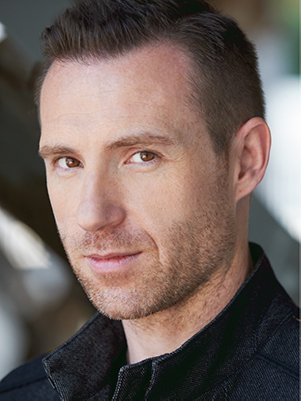
Christopher Morris
Christopher Morris is a playwright, director, and actor, and is the artistic director of the Toronto-based theatre company Human Cargo. His plays include The Runner (winner of 2019 Dora Awards for Outstanding New Play and Best Production), tremblements, Our Beautiful Sons, The Road to Paradise (co-written with Jonathan Garfinkel), and Night and Return: The Sarajevo Project (co-playwright).
Christopher, a few years ago Scirocco Drama published your play The Runner. Could you tell us a bit about the play and then perhaps touch upon the events of last year, when The Runner became the centre of some controversy?
The Runner is a one person-show about Jacob, a religious Israeli Jew who volunteers for ZAKA. ZAKA is an organization of emergency responders. Volunteers arrive at accidents/terror attacks and collect the remains of Jews to ensure they can be buried according to religious custom. I first heard about ZAKA when I was in high school and the thought of people doing this work really stuck with me because it’s the kind of work I could never do. So in 2008, I decided to write a play about ZAKA and made my first trip to Israel and the Occupied Territories to start doing research. Ten years later, after multiple trips and workshops, The Runner premiered at Theatre Passe Muraille in 2018.
During the research I did for the play, it was important for me to try to absorb the complex world my character was living in. I spoke with lots of members of ZAKA, spending time in their homes. And because of my Canadian passport, I could easily travel in and out of the Occupied Territories, making over twenty trips to Ramallah, Bethlehem, Hebron, Nablus. At the beginning of my research, I wanted to explore the circumstances around the 17-year-old Palestinian girl Ayat al-Akhras, a straight A student who blew herself up at a Jerusalem supermarket. It happened in 2002, and one of the victims was an Israeli teenage girl her age. The al-Akhras family lived in the Dheishe Refugee Camp, and through various contacts, I managed to meet Ayat’s parents. On multiple occasions I met them in their home and spoke with them about their daughter. It was a very sobering experience.
The conflict in The Runner comes after Jacob saves the life of an injured Palestinian teenage girl who’s suspected of stabbing an Israeli soldier. And by doing this, Jacob’s entire community turns on him. Throughout the play, Jacob is always trying to balance the contradictions of wanting to live in Israel and make an Israeli home, but at the same time, is trying to reconcile actions from his community he doesn’t agree with that are being made towards the Palestinian population. Actions that he feels are dehumanizing. He also turns inward, challenging his own biases and the prejudice he grew up in. It’s a powerful story about valuing human life, seeing the humanity in everyone.
The premiere was directed by Daniel Brooks, starred Gord Rand and had a set design by Gillian Gallow, which was a 24-foot-long treadmill that was always in motion. It was a very exciting piece of theatre about the complexities of being alive and co-existence. We won some awards and toured the production to five different cities across Canada.
So fast-forward to December 2023. We were preparing to tour The Runner to the PuSh Festival in Vancouver in January/2024 and then to the Belfry Theatre in Victoria in March/2024. Just before Christmas of 2023, I was notified by the Belfry that they were receiving pushback from people in Victoria who considered the play as being against Palestinians. At the same time, they also received large support from others in Victoria for the play to go on. This was around two and a half months after Oct 7th, 2023 had happened. The Belfry’s immediate response was to put out a statement which didn’t support the play, or me as the playwright, but rather to put the play’s value in question (a play that they had programmed) and to decide whether they would present it. We were scheduled to take The Runner to the PuSh Festival three weeks later at the end of January and the run at the Belfry was happening two months later. The Belfry finally informed me that they had decided to cancel the show but weren’t sure when they were going to make it public. I asked if they could wait to announce their decision until after we performed the show in Vancouver. I knew that cancelling it at the Belfry would fuel the vitriol that was just starting to be directed at our show in Vancouver. And I stressed that I was getting more and more concerned for our company’s safety and well-being, as the environment there was turning more aggressive and potentially dangerous. But The Belfry decided to announce the cancellation before we went.
The PuSh Festival, on the other hand, really supported us while there was the tension at The Belfry; Gabrielle and Keltie were amazing. The second there was word of something happening at the Belfry, they reached out to me, backed The Runner publicly and included me in all of their internal conversations about the pushback they were also receiving and discussed strategies on how to keep the conversations going in a positive manner. The PuSh festival had also programmed Dear Laila, an installation piece by a Palestinian artist Basal Zaraa that proposed an artistic dialogue between the two productions. But about a week and a half before we were to perform, PuSh received word from Basal that if The Runner was in the festival, he would pull his work from the lineup. The PuSh Festival then decided to pull The Runner.
Over the last two years, I’ve thought a lot about all that happened in terms of our theatre community. It was a very intense time for everyone involved in the difficult decisions that had to be made, but I feel saddened by the precedent the Belfry and PuSh set with their decisions. As a playwright, I write a play, share it with artistic directors/producers and in the end, they are the ones who decide whether it goes on or not. As was the situation with The Runner at that time. I wanted it to go on, but I had no control of whether that happened or not. We’re living in disempowering times that are hard to navigate. So it doesn’t surprise me that back then, and now, some people might want to oppose a particular voice or perspective. It can be a natural response to the destructive and turbulent times we’re living in. But I feel differently. I see theatre as a communal experience. It’s different from watching a movie or TV at home. In a play, you have to share a room with others whose points of view and opinions you might not agree with. Theatre is an opportunity to bring people together. It’s an art form where contrasting ideas can live and be celebrated. Theatre can be a safe place to do that.
If the function of theatre is to show human conflict on stage, there will inevitably be different points of view that an audience witnesses. In The Runner, I’m asking the audience to come along on a particular journey. We’re in the psyche of Jacob, a ZAKA member who treats a young Palestinian woman instead of an Israeli soldier. He does this out of a human instinct to help. And in doing so, his small religious Jewish community turns on him. Going on a theatrical journey with a guy like that is a great opportunity to hear challenging ideas in a safe environment. It also can lead to conversation, and I believe the need for conversation right now is crucial.
We need to encourage experiences that allow us to see each other’s humanity, even those whose ideas or perspectives we might not agree with. To me, I see The Runner as a warning against demonization, showing the importance of finding humanity in ourselves and each other. But I understand the play is not for everybody. Though I’d like you to be part of that kind of discussion, you don’t have to go see the show. But I feel the way through these challenging times we’re in is to find ways that connect us more, to have empathy for each other and opposing views. Dialogue is the way forward. Without that we’re going nowhere. Artistic directors and producers in Canada, myself included, need to remember this.
I admire how you were able to navigate that situation with grace, Chris.
It was really hard, but I had great support. First from my partner Gillian and our daughter. Samantha McDonald, who is my producer, and our publicist Blair Cosgrove, also really supported me. And in contrast to some of the negativity being directed towards the play and myself, an overwhelming number of people I knew, and didn’t know, reached out to me with support. It was very moving. What helped as well was that I was trying to take care of my team, because we were preparing ourselves to tour in a volatile and ever-threatening environment in Vancouver. So that in particular took the focus off me, in a way. And I knew from the beginning that it wasn’t about me personally, but rather an impassioned response to the very troubling events that were happening in the world.
Did the fact that the play had a stellar track record, had been seen by many audiences and had won awards, help you to understand that this was some kind of situational firestorm?
Yes. Just before we toured it to the Thousand Islands Playhouse in Gananoque in November, with no issues whatsoever. And we have plans to tour it again in the future. It was also really meaningful to perform The Runner last April in Toronto and I applaud and appreciate artistic directors like Avery and David at the Harold Green Jewish Theatre who provided this kind of dialogue with their audiences. The play can be very challenging for some Jewish audience members as it criticizes certain segments of Israeli society; it does not hold back. But I see The Runner (and all my plays) as a theatrical conversation that proposes questions. And the post-show talkbacks with the Harold Green audience were passionate, generous, and at times heated. But we had the conversation.
Tragically, there are always going to be events in the world that cause great suffering and injustice. And here in Canada, we have a great capacity for empathy and wanting to help others. But as a human, and a playwright, I never want to be “right,” to say, “This is right” or “This is wrong.” I want to know why something is happening. I want to understand the complex scenarios that make humans do what they do. We’re complicated beings, full of contradictions. We do crazy stuff. This is how life is actually lived. And if I’m going to try to write a complex character that an audience will love watching, a character that an actor would kill to play, as a playwright, I’m obliged to sit in the messy, uncomfortable grey of human nature, and write from that place.
That’s probably a nice segue to start talking about the project you’re working on now. Can you tell us about your collaboration with the Ukrainian theatre company?
Yes! Ghosts of Mariupol is a play that’s inspired by the Donetsk Academy Regional Drama Theatre who operated out of the Mariupol Theatre in Ukraine. In 2022, Russia bombed the building of the Mariupol Theatre in Ukraine, killing over 600 people sheltering there. People may remember that the word “Children” was written in large letters outside the theatre in the hopes that the Russians wouldn’t bomb it. Among the victims and survivors were staff and artists of the Donetsk Theatre. Since then, some of the Mariupol Theatre artists have relocated to Uzhhorod, Western Ukraine to continue their company’s work in a town that has been spared conflict. And in Mariupol, Russia has been rebuilding the theatre they bombed. Russia has also been sending Moscow-based theatre directors to stage propogandist productions with local Ukrainian theatre artists, some of whom are actors from the Mariupol theatre who survived the bombing. The decision for Ukrainian actors to work on these productions with Russians—a complex and conflicted decision to make—is fracturing lifelong relationships between Mariupol actors and serves as the dilemma at the centre of Ghosts of Mariupol. The play follows two actresses, best friends, as one collaborates with Russians in Mariupol on a production of Chekov’s Three Sisters, while the other creates a show for wounded Ukrainian soldiers in a rehabilitation hospital in Uzhorod. It’s a story about survival, the limits of friendship and the power of theatre during war.
In March 2024, Lidiia Karpenko, a Ukrainian journalist who emigrated to Toronto after the war broke out, wrote an amazing article about all this in the Globe and Mail and it really affected me. The dilemma, or debate, around whether a show is appropriate to do. And being a theatre artist, I know how hard it is to find work and try to make a living. And to have opportunities where I can find meaning in all of this. I’ve devoted myself to theatre. And every time I get to do it, I feel I have meaning. And yet at the same time, how do you co-exist with, or collaborate with artists from a country whose government is doing horrific things. This whole situation is very complicated. There was something about this dilemma amongst actors and theatre makers that drew me in, and so I thought, “Wow, maybe I can create a project with that company and write a play inspired by this situation.” I have experience in conflict zones. I was in active war zones in Pakistan and Afghanistan while we were creating The Road to Paradise (a play that explored the impact the war had on families on all sides of the conflict), so it’s a context I’m familiar working in. I’m also interested in high stakes human dilemmas and circumstances, both as a playwright and person, because I feel those are the events that test who we really are as people. In these pressurized situations, we either fall terribly or rise above them in ways we never thought was possible. They can reveal the best, or worst, in us.
But I can’t just go off and write a play like this on my own, in the comfort of my home, it’s absurd. And not appropriate. So I reached out to Lidiia Karpenko and asked if she’d be able to introduce me to the Hennadii Dybovskyi, the artistic director of the Donetsk Theatre because I was having a hard time figuring out how to reach them. But Lidiia was like: “Okay, but who are you?” Naturally, she wanted to know who I was, what I wanted to write about, what my intention was with this project. For the first time in my life, I actually knew what I wanted to write about, what the exact story would be. And that I would be exploring both sides of this complex situation. I knew this was a very sensitive subject and it was important to clearly articulate the arguments that will be in my play to give Lidiia, and Hennadii, the opportunity to say “No” up front, right from the start. So I did with Lydia, and it went very well and she set up a Zoom call between her, Hennadii and me, where she would translate for us as he didn’t speak English and I don’t speak Ukrainian. The Zoom call happened in July 2025 and like with Lidiia, I explained what I wanted to write about, if he’d be interested in having a collaboration with my company Human Cargo, and if he’d be up for me coming to Ukraine that to hang out with him and his company for a month to do research and learn about their theatre company. He was totally up for it and said “Yeah, come on over! Let’s go.”
So I spent a month in November 2024 in Uzhorod, Ukraine and it was a really amazing experience. Mostly because of how much I was welcomed and taken in by them. They’re a European-style repertory company, so they’re always performing shows, or rehearsing shows, or touring shows—it’s very active—and they welcomed me into every aspect of it. They brought me to every rehearsal, I toured their shows with them on the road, helping them set up and strike. But on my first day there, Hennadii took me to this great restaurant, with his producer (who speaks English) and their dramaturg and we had a deeper discussion about what I wanted to write about, how a collaboration between our companies may look. It was another big check-in, and it’s these types of discussions (that continue to this day) that builds trust between collaborators. That first trip was a very moving and inspiring time.
When I got back to Canada, Hennadii was like, “Okay, so when are you going to write the play?” And I was like, “Well, I usually take years to write a play.” But he said, “Can’t you just write the play? Write it!” So I really pushed myself and finished a rough draft of the play in April 2025, making sure that it included all sides of the arguments I wanted to explore. For example, I have a character in the play, Mariya, who’s living in Russian-occupied Mariupol and is acting in a Russian production. She’s grappling with this decision, saying that not all Russians are bad, that the Russian actors she’s working with aren’t the actual people doing the murders, etc. It was important for me to include this dialogue, as I know there isn’t a lot of space/support for this kind of conversation in Ukraine, at all. So I wanted to make sure there was no illusion about what I was writing about. So I put my script through a translation app, crudely translating it into Ukrainian, and sent it off to Hennadii to wait and hear what he thought. And at that moment, I thought, “Okay, this is it: this is where he’s either going to say “No,” or “Let’s do it!” But Hennadii read it and Hennadii said he wanted to use the play as their company’s artistic response to the upcoming anniversary of the bombing, which is March 16th, 2026, and asked if the play could be ready by then. Which was insane, given how long I usually write. He also told me that he wanted me to direct this Ukrainian-language production, which wasn’t what I was imagined doing. But I said, “Okay, let’s, let’s do it.”
So I wrote another draft. Lidiia, the Globe and Mail journalist, connected me with Yulia Lyubka, a really great translator in Uzhorod, and in September Yulia and I worked on a Ukrainian draft of the script, and I returned to Uzhorod for a month this past October 2025 to workshop the play and work with the actresses who will be performing the show. It was a good time for me to try out how to communicate and direct in rehearsals. I did more research, more writing. And since I’ve been back in November, I’ve written like a crazy person, finishing the performance draft for Ukraine and as we speak, Yulia is translating it. On January 30th, I head back to Ukraine for seven weeks to rehearse and present the play for two performances in Uzhorod the week of March 11th and 12th, and then we’ll head to Kyiv to do a high-profile performance of the show on March 16th, the anniversary of the bombing.
So yeah, this project has been a really fast process for me, but a really exciting proposition. I also learned that I can write a play in faster amount of time then I’m used to. I feel so honoured to be doing this.
Language is obviously a challenge, but are there other challenges with working across borders the way that you do?
Last year when I was starting the project, I was teaching playwrights at the National Theatre School, and I made this project part of the focus of the class. I held one of our classes via Zoom while I was in Ukraine on my first trip. These playwrights were with me before my first trip there, and we had a lot of discussions about what I was about to do. And inevitably, questions arose from all of us about me as a Canadian going there to write a play about Ukrainians; questions that I continue to ask. Do I have the right to be writing a story like this? What does it mean to write about other people? For me, it’s the process that matters most. I reached out to the company and asked permission to come, and they invited me to go there. They read everything that I write and we’re in constant conversation about it. Most importantly, they tell me over and over again how much they appreciated that I reached out. This project has brought theatre artists from different parts of the world together. We’ve become colleagues who are creating something really exciting. And none of it would have happened without reaching out, without finding the best way to reach out. The current climate we’re living in in North America, to be more isolated from each other, to quickly denounce the concept of a writer writing about something outside of their unique individual experience, has the potential to stifle so many collaborations. If I had followed this way of thinking and never reached out in the first place, this project between our two companies wouldn’t exist. It requires great sensitivity and care. And this type of relationship-building takes time, and it can be uncomfortable at times and discombobulating, but there’s value in in reaching out. Especially when it’s uncomfortable. I remember my first day there, I was sitting in the artistic director’s little office, and he indicated that he had to leave and would be back in a couple of minutes, and I remember sitting there in his office thinking, “What the hell am I doing here? I’m in Ukraine, why am I in this guy’s office? What is going on?” But reaching out and stepping into new situations like this is what I love doing. For me, it’s the most exciting way to create theatre and build friendships with people. And it’s okay that it’s not always comfortable, I search out things that make me uncomfortable —some of the best experiences I’ve had come from being uncomfortable.
But it’s also tricky for me too, because I have privilege. I’m a white man from a wealthy country. I can very easily fly in and out of the country. Financially, logistically, you name it, I have it. And sometimes that can create an inherent power imbalance where I’m afforded more leeway professionally—when it hasn’t yet been earned yet. So I’m always aware of this privilege and how it affects everything that I’m doing. And I’ve always believed that this collaboration has to be a two-way street. On my first trip, they were about to tour one of their shows to England and didn’t have a proper English translation of the script or surtitles yet, so I helped to translate the play into English and created the surtitle program they could use on their tour—I’ve created a few of them on past shows I’ve worked on. There’s also interest in Canada to do an English-language production of the play and I’m planning on bringing the Donetsk Theatre to Canada to present one of their shows alongside our production of Ghosts of Mariupol. We’re just figuring out whether it will be the Ukrainian production of Ghosts of Mariupol, or another one of their shows. It’s also very important to me that the Donetsk Theatre Company be listed as one of the producing partners on whatever Canadian productions happen of the show, given how much they’ve contributed to this play’s creation. I’m not naive enough or egotistical enough to think that my play or just my presence in Ukraine is enough to offer back—au contraire, they may have to overcome my shoddy writing and questionable directing! So this collaboration has to be undertaken thoughtfully. It’s a two-way street, otherwise it’s not right. It’s not appropriate.
To bring the Ukrainian actors here and to have them bring to life your play—which is an experience that they have lived—that’s really a gift for us in this country.
The actresses who I’ll be working with (Kateryna and Olesia) are the age of the characters in the play—23 and 24 years old. And I channeled Kateryna when I was writing the play, imagining her as the character. When I was over there in October 2025 and they were reading sections of the play, it was very moving to hear young people articulate some of the shit they’re going through. I thought, “Why do young people have to experience this? Give it to me. You know, I’ve lived a life, give that shit to me.” To think there’s a generation of young people who are having to deal with these types of heavy things in their life, it’s really heartbreaking.
Another interesting element to this project is working in translation. Ghosts of Mariupol will be the second play of mine which is having its premiere in another language. My last play tremblements, which premiered at Montreal’s Espace Go in 2023, was a French-language production throughout rehearsals and in performance. I have a basic level of French, which is getting better and better, but it forced me to experiencethe process on another level. I knew the English text in my head, and I could follow along in the French text, I knew about a third of the words. But it became less about the individual words and more about the flow of the text, the aural flow, and the actress’s emotional journey through the text. I would be listening and focusing on the broader movement of the text. I felt that again in Ukraine last November, I was following the flow and emotion of the script, as opposed to word-for-word. Previously on The Runner, I was highly aware of words or passages that didn’t work; thinking this word isn’t right, that sentence should be moved, and that’s where a lot of my attention was going. But with tremblements, I couldn’t do that because of my inability to understand French on that level. And I was more forgiving of the actress, Debbie Lynch-White (who is utterly extraordinary by the way and a gift to develop any play with); I didn’t care if she skipped three sentences, I didn’t care. Being forced out of focusing on the minutiae of the text allowed me to give over the play to the actress and the director. My words were just the beginning; it was now theirs. The production also presented Debbie a big dare as a performer. Similar to how The Runner was staged—Gillian Gallow was also the set designer—the set for tremblements was a sixteen-foot revolve that was always in motion and its speed would fluctuate depending on what the character was going through; it was fantastic! So there was a physical element to the show, and an intense emotional journey, creating a challenging journey for Debbie to go on each night. So who cares if she skips a page? Like really, who cares? And in the end, all of this writing, all of this work is for the audience; it’s all about Debbie and the audience, not the weird playwright in the corner wincing when a sentence might be skipped. Letting go meant a lot to me as a playwright. I found it painful at first, and odd, but it forced me to step back and see the bigger picture. My mind is already going there with Ghosts of Mariupol. I’m focusing more on the journey of an emotional current, as opposed to the minutiae of words. The script is written, it exists, but in performance, it’s passing through a living actor, it’s live theatre, so space needs to be given. It’s really helping me give over the play. I think, I hope, it’s allowing me to be a more generous as a writer at that stage of the process.
-

The Runner
Price range: $9.99 through $15.95