
Posted May 4, 2026
The Interview – Rachel Mutombo

Rachel Mutombo
Rachel Mutombo is an award-winning actor and playwright based in Montreal. Her first play, Vierge,won first prize in Infinitheatre’s Write-On-Q playwriting competition in 2020 and was shortlisted for the 2024 Quebec Writers Federation Prize for Playwriting. Her TYA play, Homeroom, won the Playwrights Guild of Canada’s Tom Hendry Award in 2021. Rachel has been a mentor for Black Theatre Workshop’s mentorship program and the Paprika Festival.
Rachel, I’d like to begin by asking you about your play Vierge, which we recently published.
I was always interested in the difference in how girls and boys are treated in the church. As somebody who grew up in the church, it was so evident to me—the gap in expectations placed on girls versus boys. And yet, somehow, we’re all supposed to get to the same result. We’re all supposed to get to this marriage finish line, have children, be holy… But depending on your gender, the way it was talked about with you—or not talked about—felt kind of wild to me, honestly. There was something in that I wanted to explore.
And something that I love is that theatre can show us conversations that we would never see otherwise. It gives us a sneak peek into another side of the world—another way of living that isn’t necessarily our own lived experience. So, I wanted to explore that, too.
Those two ideas just kind of brewed in me for years. At some point, it turned into this thought: “I’m going to have these four girls in a church basement having a youth group meeting, and we’ll see what happens.”
You studied acting at the National Theatre School. What led you into writing?
I did, I chose NTS specifically because I was dead set on only being an actor. A lot of other theatre schools, especially the universities with BFA programs, tend to offer a broader experience of theatre training. And I was like, “No, I don’t want to get sidetracked. I don’t want to end up a director or a playwright. I’m solely going because I just want to be an actor!” And here we are.
But I was always a writer. As a kid, I enjoyed writing short stories and poems. and so that It has always existed in me. I didn’t realize it for year, but my love of text and language was very tied into my practice as an actor. I would never get tired of doing table work in rehearsal. And whenever I had the chance to workshop a new play, I’d jump at the chance. It was always exciting to me to watch playwrights work. To watch the way they made dialogue and scenes appear like magic in an instant. And I think a lot of other artists saw something in me that I hadn’t yet. I’d get asked a lot if I was going to write a play or if I’d considered it, but it took a while to click.
But then in 2019 I was in a show called School Girls; Or, The African Mean Girls Play by Jocelyn Bioh. That experience for me was so profound. It was one of the most beautiful experiences I’ve ever had as an actor on stage, from rehearsal all the way through to performance. A large part of that was feeling so connected to the story of these African girls — and being in a play that talked about hard things but was a comedy. And there was such authenticity in Bioh’s writing of those characters. They never felt like caricatures or stereotypes. She allowed all eight of us in that show to be seen as unique and distinct and wholly African. That experience gave me the courage to dive in Vierge.
So the marriage of all those things came together bit by bit. And that’s when I decided to join the Playwrights Unit at Factory. I wrote the first scenes of the play in that program. And then I was gifted with a global pandemic several months into that, which meant I had all the time in the world to write that play…and several others.
Could you give us a sneak peek of some of those other projects?
The pandemic was a very crazy time for me, as it was, I’m sure, for a lot of people. I wrote first drafts of five different plays between 2020 and 2022. My motivation was the fact that I didn’t know if I would ever get this amount of free time again. And ultimately, I was right. I was fortunately feeling very creative and I had all these stories that I wanted to explore, so I just kept writing. Vierge was obviously one of those plays. I also wrote a TYA show called Homeroom and another play called Wake, which will be co-produced next season by Persephone Theatre and Western Canada Theatre Company.
What’s Wake about, Rachel?
On that same theme that I mentioned earlier about wanting to explore difficult subjects through comedy, Wake is a comedy about the three days before a funeral when family and friends gather to mourn. In Congolese cultures, when you have a wake, it’s usually on a weekend and it’s an open-door policy. Anyone in the family, anyone in the community pops by to give their condolences and to just chat with you, to find out how you’re doing, and to catch up. So that’s the premise of the play, but like in any piece of theatre, things have to go wrong. I don’t want to give too much away, but are some challenging family dynamics and surprise visits throughout.
I’m very excited about it. It’s a big show, so that part is as well very exciting. The play is a product of a commission from Persephone, and I was really given free rein to explore and to be creative.
Do you have any advice for aspiring playwrights?
I think there is a lot of beauty in not knowing what you’re doing yet. The first experience of writing a play is just whatever it’s going to be. It’s before the voice of any critic comes in, the voice of any potential collaborator comes in, the voice of any audience comes in. It is the most precious and beautiful time where you can just write your play and follow your instincts and just go with it.
I would say to anybody who’s writing a play for the first time: Don’t get in your own way. Tell yourself you’re going to write five pages, then write five pages of whatever. Forget all of what you think you know and just follow what your gut is telling you. There’s a lot of beauty to be found in that creativity — before we start to judge ourselves and put expectations on ourselves. It’s something that I strive to get back to every single day.
-
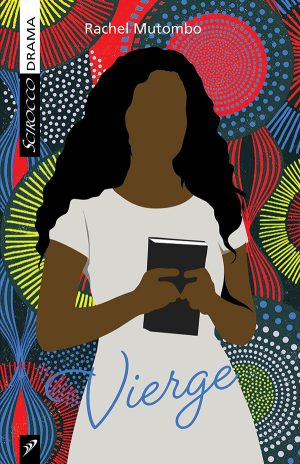
Vierge
$18.95